
Braces vs. Invisalign: Best Choice for Your Child?
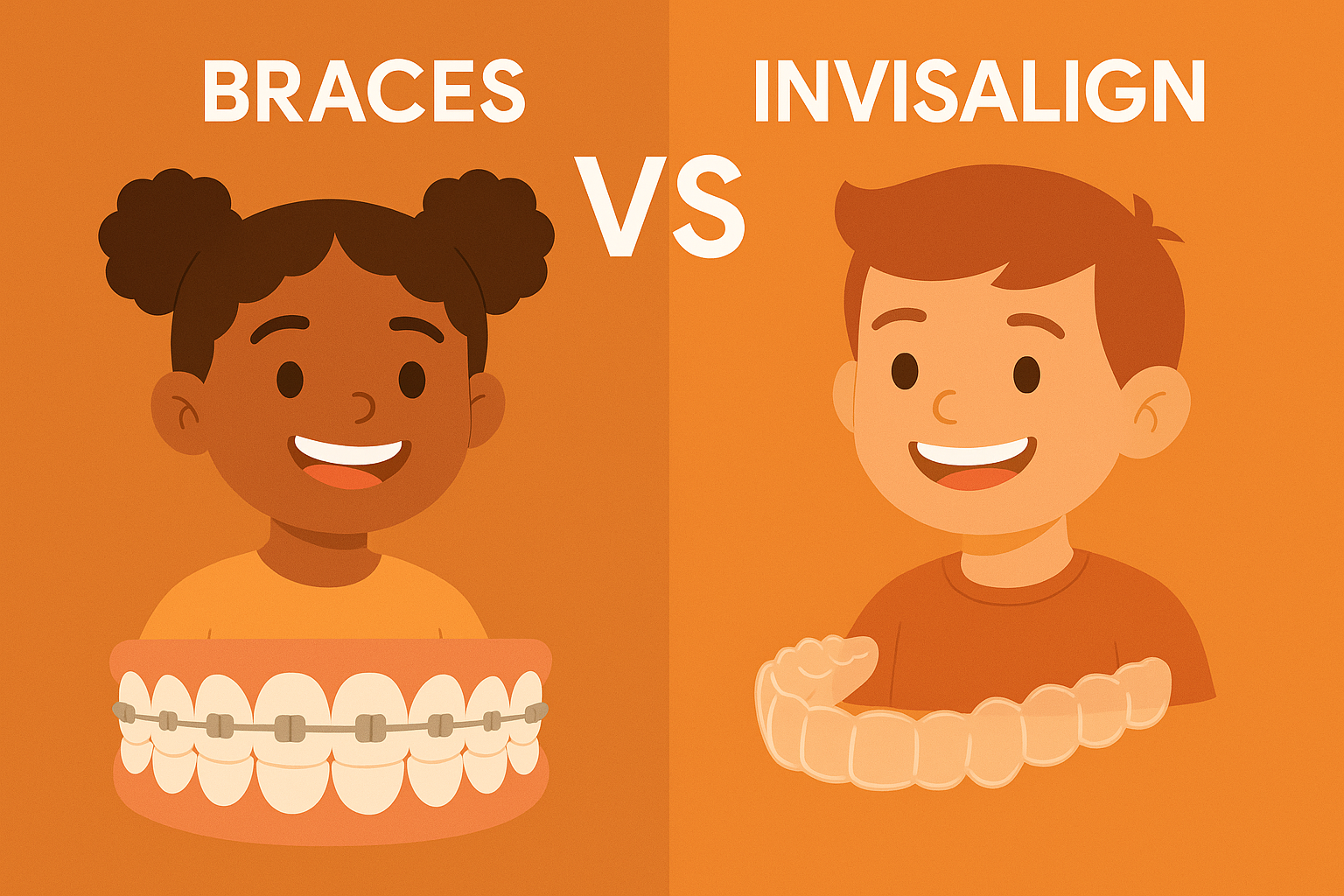
Parents usually weigh Braces vs Invisalign by asking one practical thing. Which option will straighten a child’s teeth safely, predictably, and without turning family life upside down. Here’s a fast way to frame it. Braces are fixed and highly controlled. Invisalign aligners are removable and discreet. Complex bites often suit braces. Mild to moderate crowding often suits aligners. The best pick depends on your child’s age, case complexity, and day to day routines.
Braces vs Invisalign: what parents need to know
There’s a reason families ask “Braces or Invisalign?” so often. Both can create healthy alignment and a confident smile. They just get there in different ways. Braces are bonded to teeth. That means consistent force, great control, and no reliance on a child remembering to wear anything. Invisalign uses a series of clear trays worn 20 to 22 hours per day to guide teeth step by step. That removability is the blessing and the challenge.
Think through daily life. A teen who snacks all day or misplaces things may struggle to keep trays in. A child who loves drama or sports might feel better with aligners that come out for rehearsals and games. Braces can rub at first and have food rules, though dental wax and a few weeks of adaptation usually settle the bumps. Aligners feel smooth, but trays must be removed for every bite and sip that isn’t water, then teeth brushed before trays go back in. That rhythm suits some kids and frustrates others.
Invisalign or braces comparison by age and case complexity
Age 7 to 10. Early interceptive treatment focuses on guiding jaw growth and making space. Fixed appliances are common in this phase. Clear aligners can be used selectively, but many early-stage corrections favor braces or simple expanders.
Age 11 to 13. Permanent teeth are arriving and growth is active. Both Invisalign and braces can work. Choice hinges on compliance, spacing, and bite. Deep overbites, impacted canines, or rotations needing extra control often lean to braces.
Age 14 to 17. Most teens can do either. Aligners work well for mild to moderate crowding and spacing when worn consistently. Severe crowding, crossbites, and surgical or complex elastics cases usually respond best with fixed braces for precise movement .
Complexity drives predictability. Metal and ceramic braces excel when teeth need complex movements, when elastics and auxiliaries are likely, or when compliance is uncertain. Invisalign shines when a teen wants a low profile look and can keep trays in the mouth on schedule every single day.
Fixed braces vs Invisalign: comparing metal, ceramic, and Damon systems
Parents often ask for an Invisalign or braces comparison across the specific systems. The materials and mechanics change the look and day to day experience more than the core biology of tooth movement.
Metal braces vs invisalign
Control. Metal braces give orthodontists high control for rotations, root torque, and bite correction. That matters in complex cases .
Visibility. Today’s metal brackets are smaller than the ones most adults remember, yet they are visible. Aligners are clear and low profile.
Comfort. Braces can rub cheeks early on. Aligners feel smooth. Tenderness from tooth movement occurs with both during active shifts.
Hygiene and eating. Braces require careful brushing and flossing and avoiding sticky and very hard foods. Aligners come out for meals, but kids must brush before trays go back in.
Ceramic braces vs invisalign
Aesthetics. Ceramic brackets blend with tooth color for a quieter look on the front teeth. Aligners are nearly invisible at a conversational distance.
Fragility and staining. Ceramic can be more brittle than metal. Clear ligatures can pick up pigment from foods between visits. Aligners can discolor if worn while drinking colored beverages.
Control. Ceramic braces move teeth like metal braces and handle complex mechanics. Aligners work well for many teenage cases when compliance is strong .
Damon braces vs invisalign
Damon is a brand of self-ligating braces. The clip holds the wire rather than elastic ties. The system is marketed for lighter forces and fewer visits. Research shows self-ligating braces perform similarly to conventional braces for outcomes and overall duration. Claims of dramatically faster treatment remain mixed in published reviews. Aligners can also be monitored on extended intervals, though check-ins are still needed to track progress and growth.
Braces vs Invisalign cost in Canada
Parents usually want straight talk on fees first. In Canada, comprehensive orthodontic treatment is typically quoted as a total case fee that covers active treatment, most visits, and standard retainers at the end. As of 2025, typical Canadian ranges for full treatment often overlap for braces and Invisalign. Final numbers depend on case complexity, length of treatment, clinic location, and lab or material costs. Many families also use employer dental plans or health spending accounts to offset a portion of fees.
Why Families Trust Smiley Kids Dental for Braces & Invisalign Treatment
Choosing the right orthodontic option is easier when you have a team that understands kids, teens, and the unique needs of growing smiles. At Smiley Kids Dental, our orthodontic care is designed to be gentle, predictable, and stress-free for both children and parents.
We use advanced digital scanning technology for accurate treatment planning, and our pediatric-focused team makes every visit comfortable and confidence-building. Whether your child is considering braces or Invisalign, we guide families with clear explanations and personalized recommendations.
To get started, simply book an appointment and let our team help you choose the best treatment for your child.