
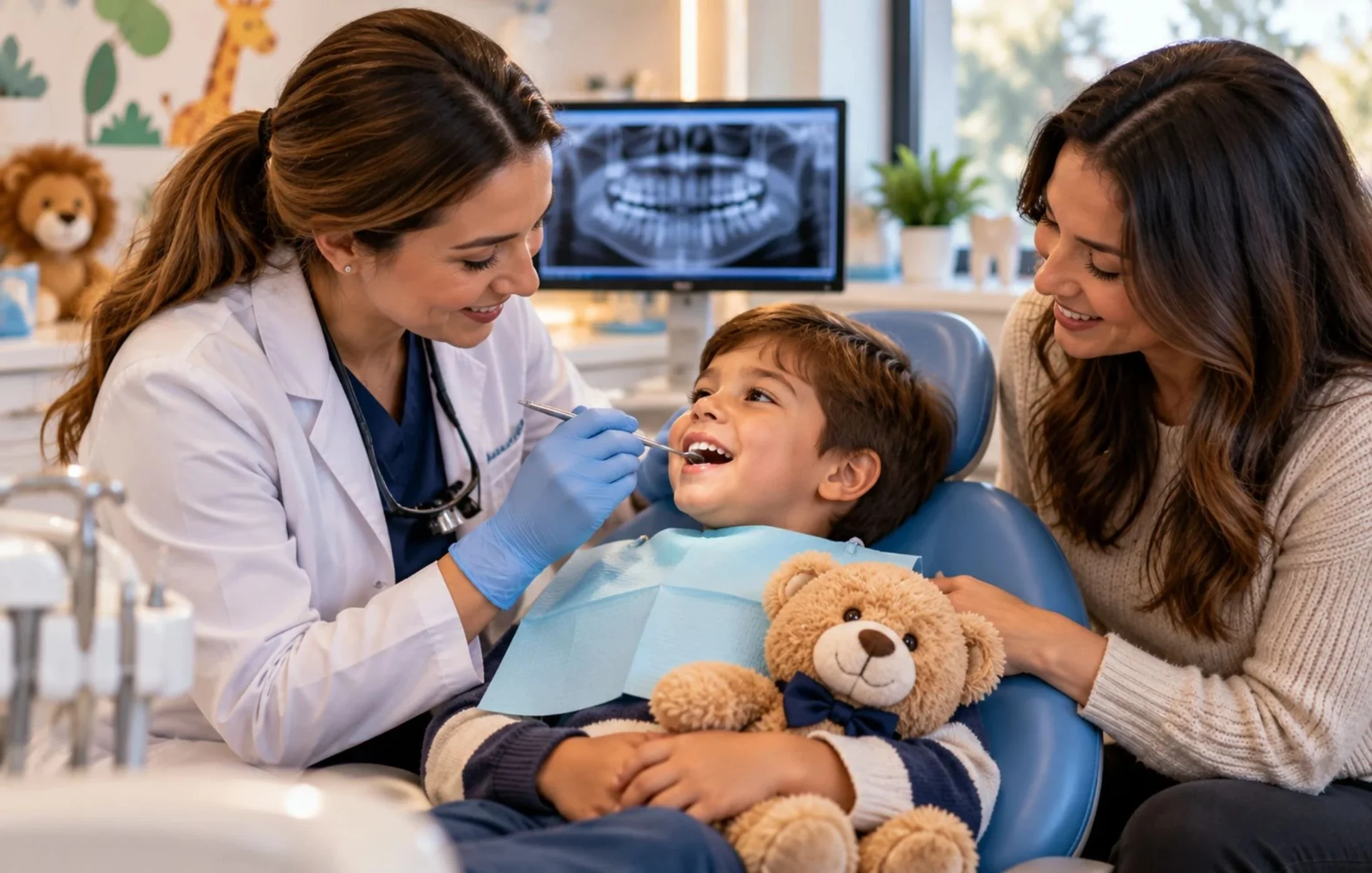
Your child brushes their teeth, eats well, and rarely complains about discomfort. Everything seems fine until a dental examination reveals an early cavity, a bite concern, or a tooth developing out of position. Many dental problems begin quietly, without obvious pain or visible damage.
Understanding the things a pediatric dentist can spot helps parents recognise why routine dental visits matter. A pediatric dentist evaluates more than visible teeth. They examine gum health, jaw growth, bite alignment, and the development of permanent teeth to identify concerns before they become harder to treat.
Early Signs of Dental Problems in Children
Some early signs of dental problems in children are difficult to recognise at home. During an examination, a pediatric dentist looks for:
Early tooth decay: White, chalky patches, weakened enamel, and small cavities that are easy to overlook.
Gum inflammation: Redness, swelling, or bleeding that signals irritation or plaque buildup.
Enamel defects: Changes in enamel thickness or appearance that increase vulnerability to decay.
Bite problems: Teeth that overlap, crowded teeth, or an uneven relationship between the upper and lower jaws.
These findings help a dentist recommend appropriate preventive care or treatment. At Smiley Kids Dental, routine pediatric dental care focuses on protecting children's oral health through examinations, prevention, and timely intervention.
Baby Teeth Development and Hidden Dental Concerns
Healthy baby teeth development supports chewing, speech, and the space required for permanent teeth to emerge. A pediatric dentist tracks how primary teeth erupt, how they fit together, and whether they fall out at an expected stage.
A baby tooth that remains in place unusually long, a permanent tooth erupting out of position, or significant crowding deserves assessment. Dental X-rays, when clinically necessary, help reveal developing teeth beneath the gums and identify concerns that a visual examination cannot confirm.
Parents should also discuss persistent thumb-sucking, pacifier use, teeth grinding, and mouth breathing. These habits do not automatically cause dental damage, but an examination helps determine whether they are affecting tooth position, jaw development, or oral health.
If you have noticed changes in your child's teeth or it is time for a routine examination, book an appointment. A timely visit helps you understand your child's needs and plan the right next steps.
What Are the Common Teeth Problems in Children?
The common teeth problems in children include tooth decay, gum inflammation, enamel defects, dental injuries, and bite alignment issues. Each requires a different approach.
For example, early decay often responds to preventive treatment or a filling, depending on its severity. More advanced cavities require prompt assessment to prevent further damage. A dentist also checks whether a chipped tooth, dental injury, or premature loss of a baby tooth needs follow-up care.
When should a child see a pediatric dentist? Children should have their first dental visit by their first birthday or within six months of their first tooth appearing. Regular checkups help identify developing concerns before symptoms become obvious.
If your child has tooth pain, sensitivity, swelling, or difficulty chewing, arrange a dental assessment promptly. Facial swelling accompanied by fever or difficulty swallowing requires urgent care.
What Is the Rule of 7 in Pediatric Dentistry?
The Rule of 7 commonly refers to the recommendation for a child's first orthodontic evaluation around age seven. By this age, children usually have a mix of baby teeth and permanent teeth, allowing an orthodontic professional to assess developing bite and alignment concerns.
An evaluation does not mean your child automatically needs braces. It helps identify issues such as significant crowding, crossbites, or jaw growth concerns and determine whether monitoring or early treatment is appropriate.
Protect Your Child's Smile With Smiley Kids Dental
Dental problems are easier to address when identified early. Waiting for a toothache or visible cavity can allow a manageable concern to progress and require more extensive treatment.
Explore Smiley Kids Dental services to learn about preventive and restorative care for children. Your child's smile deserves attention before a small concern becomes a bigger problem.