
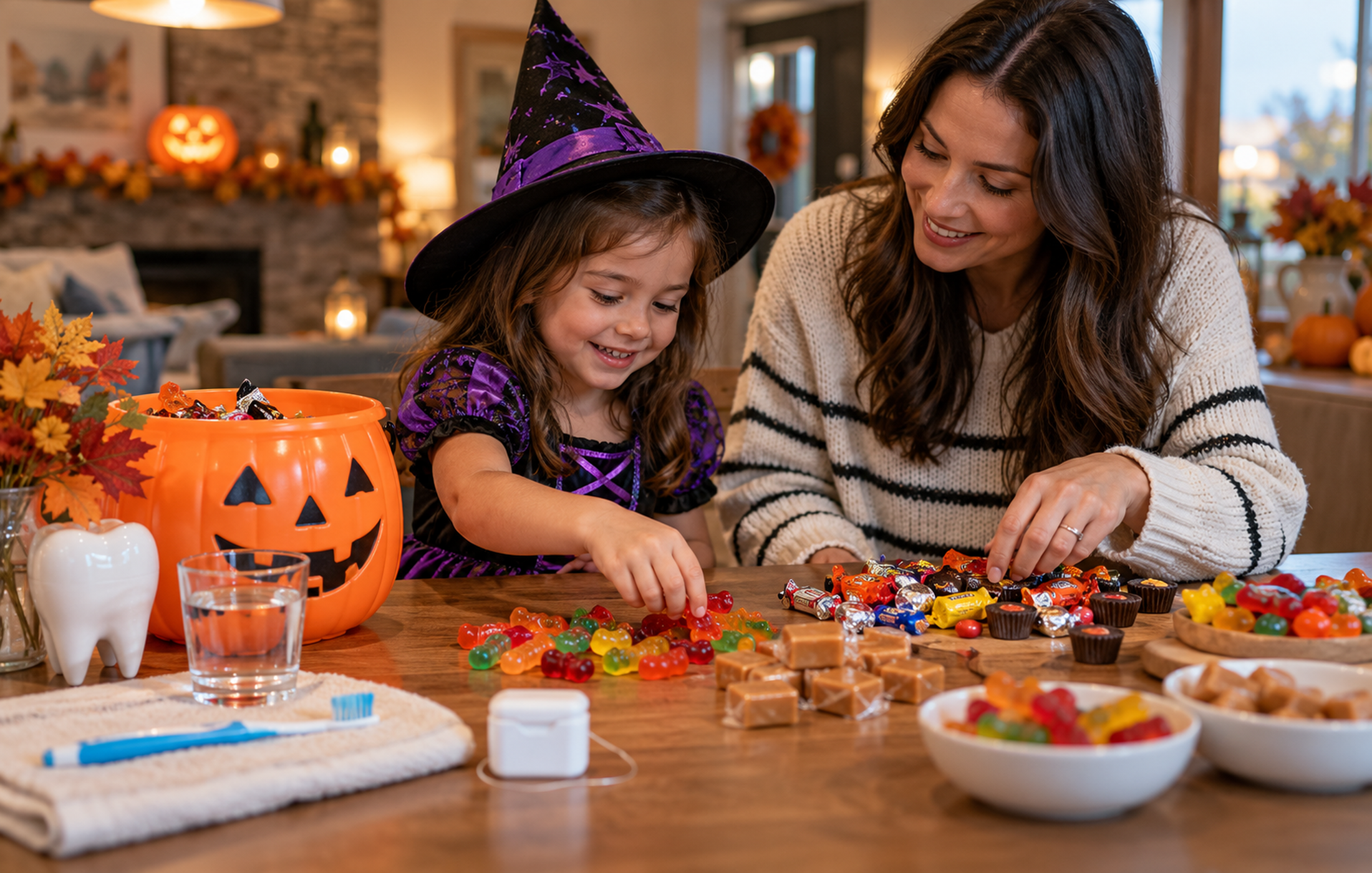
Halloween in Canada brings costumes, trick-or-treating, and bags filled with sweets. But some of the biggest threats to children's smiles hide inside those colourful wrappers. Sticky gummies, chewy caramels, sour candies, and hidden sugars can leave teeth exposed to cavity-causing acids long after the treats are gone.
The good news is that children can enjoy Halloween while protecting their oral health. Parents need to know which treats pose greater risks, which warning signs deserve attention, and when a dental visit can prevent a small problem from becoming a painful one.
The Sticky Monsters That Stay on Teeth
Gummies, taffy, caramels, and chewy sweets can cling to tooth surfaces and settle into the grooves of molars. Because these treats are harder to clear away, they can give oral bacteria more time to use available sugars and produce enamel-damaging acids.
Does sticky candy damage fillings or dental crowns? Sticky candy can pull at loose or weakened dental restorations and may dislodge a filling or crown. Children with existing dental work should avoid particularly sticky treats and contact their dentist if a restoration becomes loose or falls out.
Parents can reduce the risk by offering treats with meals rather than throughout the day. Encourage children to drink water after eating sweets and maintain their regular brushing and flossing routine.
How Hidden Sugar Causes Tooth Decay
Bacteria in dental plaque break down sugars and produce acids that weaken tooth enamel. Repeated acid attacks can lead to cavities, particularly when children snack frequently or do not clean their teeth effectively.
Sugar can appear on Canadian ingredient lists under several names, including sucrose, glucose, fructose, dextrose, maltose, syrups, and fruit juice concentrates. Labels describing candy as natural or organic do not automatically make it tooth-friendly.
Even sour candies can be troublesome because many contain sugar and acids that can contribute to enamel erosion. Sugar-free sweets may reduce sugar exposure, but some contain sugar alcohols that can cause digestive discomfort when eaten in large quantities.
Plain chocolate generally clears from teeth more readily than sticky gummies or caramels. However, portion size and how often children eat sweets still matter.
Warning Signs Parents Should Never Ignore
Signs of cavities in children can be subtle at first. Watch for:
White, chalky patches near the gumline.
Brown or black spots on teeth.
Sensitivity when eating or drinking.
Pain when chewing.
Visible holes or damaged tooth surfaces.
Why do my teeth hurt after eating sweets? Sweet foods can trigger pain when decay, exposed dentine, or another dental problem makes a tooth sensitive. Pain does not always mean a cavity, but recurring discomfort deserves a professional assessment.
Knowing When to see a dentist for a cavity can prevent avoidable complications. Arrange an appointment if your child has tooth sensitivity, visible decay, or persistent pain. Facial swelling, fever with dental pain, or difficulty swallowing requires urgent medical or dental assessment.
When to Book a Dental Checkup After Halloween
A Dental checkup after Halloween is a useful opportunity to assess existing cavities, examine fillings and crowns, and discuss preventive care. Do not wait until Halloween ends if your child already has pain or visible damage.
At Smiley Kids Dental, parents can explore child-focused dental care and learn how preventive visits support healthier smiles.
If you are searching for a Dentist near me in Vancouver or Burnaby, choose a dental provider who can assess your child's needs and explain suitable treatment options. Early care can help prevent decay from progressing into deeper cavities, infection, or more complex treatment.
Keep Halloween Smiles Safe With Smiley Kids Dental
Halloween does not need to become a battle over candy. Sort treats together, limit frequent sugary snacking, offer water, and encourage children to brush twice daily with fluoride toothpaste. Avoid brushing immediately after acidic sweets or drinks; rinse with water and wait about 30 minutes before brushing.
Explore Smiley Kids Dental services to understand available dental care for children. If your child has sensitivity, a suspected cavity, or damaged dental work, book an appointment for an assessment.
A little prevention today can help keep Halloween treats from turning into tomorrow's dental emergency.