
Are Electric Toothbrushes Really Better Than Manual Ones?
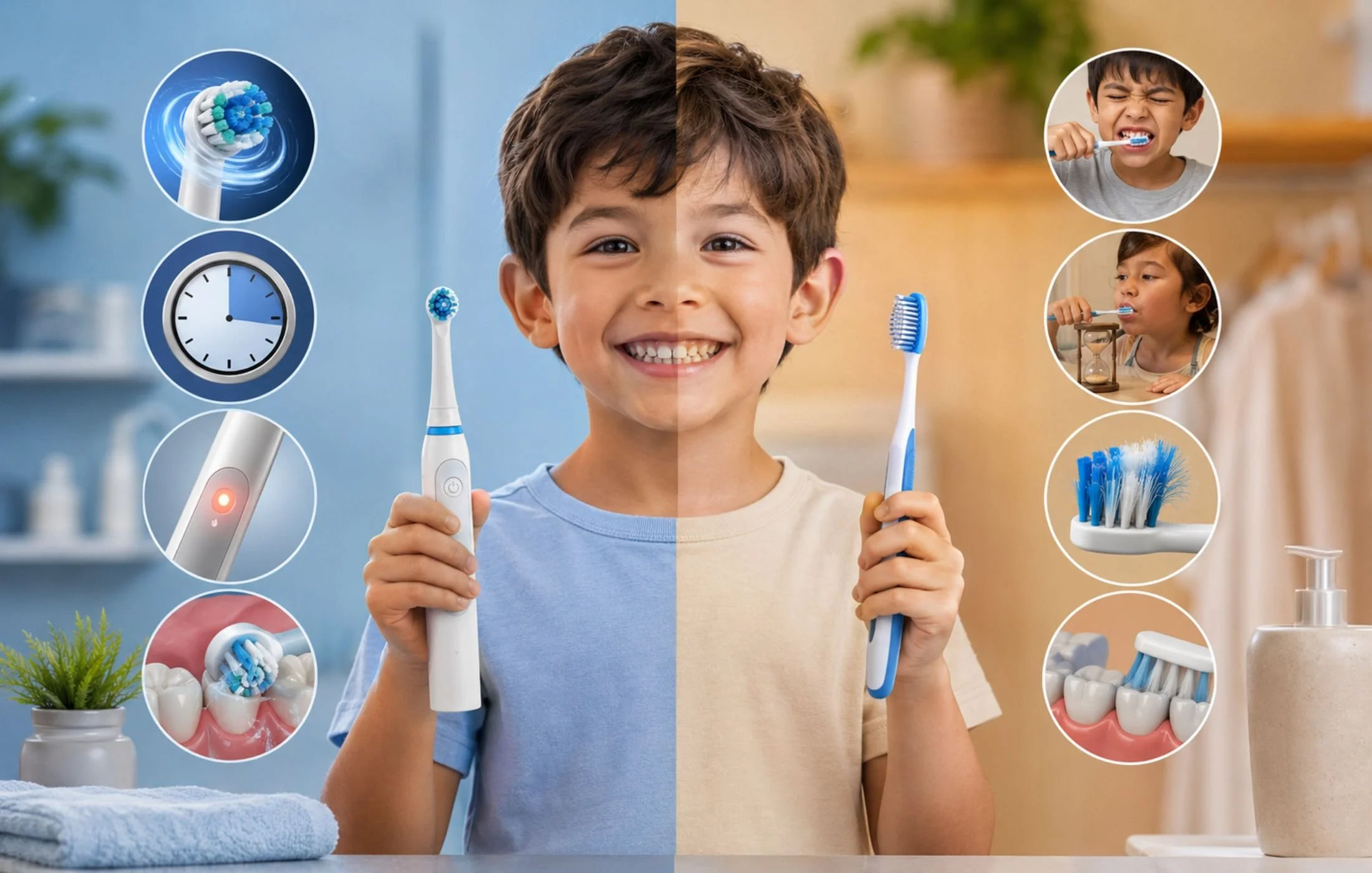
If you’ve ever stood in the toothbrush aisle wondering which one your child actually needs, you’re not alone.
The truth is that electric toothbrushes have a slight edge for most people, but a manual toothbrush is still entirely effective when used correctly.
The best toothbrush is the one your child uses consistently, for two minutes, twice a day.
Are Electric Toothbrushes Better?
For most children and adults, yes, modestly. Are electric toothbrushes better at removing plaque? Research from institutions including McGill University suggests that oscillating-rotating electric brushes reduce plaque and gingivitis slightly more effectively than manual brushing over time.
The reason is not magic. It is consistency. Electric toothbrushes do the movement for you, which means technique matters less. For children who rush, press too hard, or miss the same spots every night, that built-in consistency makes a real difference.
That said, a manual toothbrush in careful hands achieves the same result. Technique still matters more than the tool.
Why Are Electric Toothbrushes Better for Some People?
They have a few features to ease the boring task of brushing one’s teeth daily for 2 minutes straight. Built-in two-minute timers remove the guesswork around brushing duration. Most children, without a timer, stop well before the two-minute mark.
Pressure sensors prevent aggressive brushing that wears down enamel and irritates their gums. Smaller brush heads make it easier to reach back molars where decay most commonly starts in children.
Additionally, for kids who resist brushing, the novelty of lights, music, and characters on electric brushes genuinely improves compliance. A child who wants to brush is a child who brushes better.
Are Electric Toothbrushes Better for Braces?
Brackets and wires create more surfaces for plaque to hide around, and the consistent motion of an electric brush helps clean those areas more thoroughly.
That said, the brush alone is not enough. Children with braces still need to angle the brush carefully around each bracket, clean along the gumline, and use interdental tools where recommended. If your child has braces and you want personalised guidance, book an appointment and we will walk you through a cleaning routine that works for their specific needs.
How Long Do Electric Toothbrushes Last?
The handle typically lasts several years with normal use. The brush head is a different matter entirely and should be replaced every three months, or sooner if the bristles are visibly splayed.
Signs the handle may need replacing include inconsistent motor performance, charging issues, or a noticeably weaker vibration. Replacement brush heads are an ongoing cost worth factoring into the decision.
Do Dentists Recommend Electric Toothbrushes vs Manual?
At Smiley Kids Dental, our recommendation depends on the child, their age, their brushing habits, and what they will actually stick to.
For children who brush well and enjoy their manual brush, there is no urgent reason to switch. For children who rush, resist, or struggle with technique, an electric toothbrush is a practical upgrade worth making. To explore how we approach electric vs manual toothbrush choices as part of broader preventive care, visit our dental services page.
The Bottom Line
Electric toothbrushes offer a genuine advantage for many children and adults, particularly those who struggle with technique or consistency. But they are not a substitute for the basics: soft bristles, two minutes, twice a day, and regular professional care.
Not sure which is right for your child? Visit Smiley Kids Dental and let us help you find the right fit. Or book an appointment and get personalised advice based on your child's actual brushing habits and oral health needs.