
AI in Pediatric Dentistry: What Can It Actually Do?
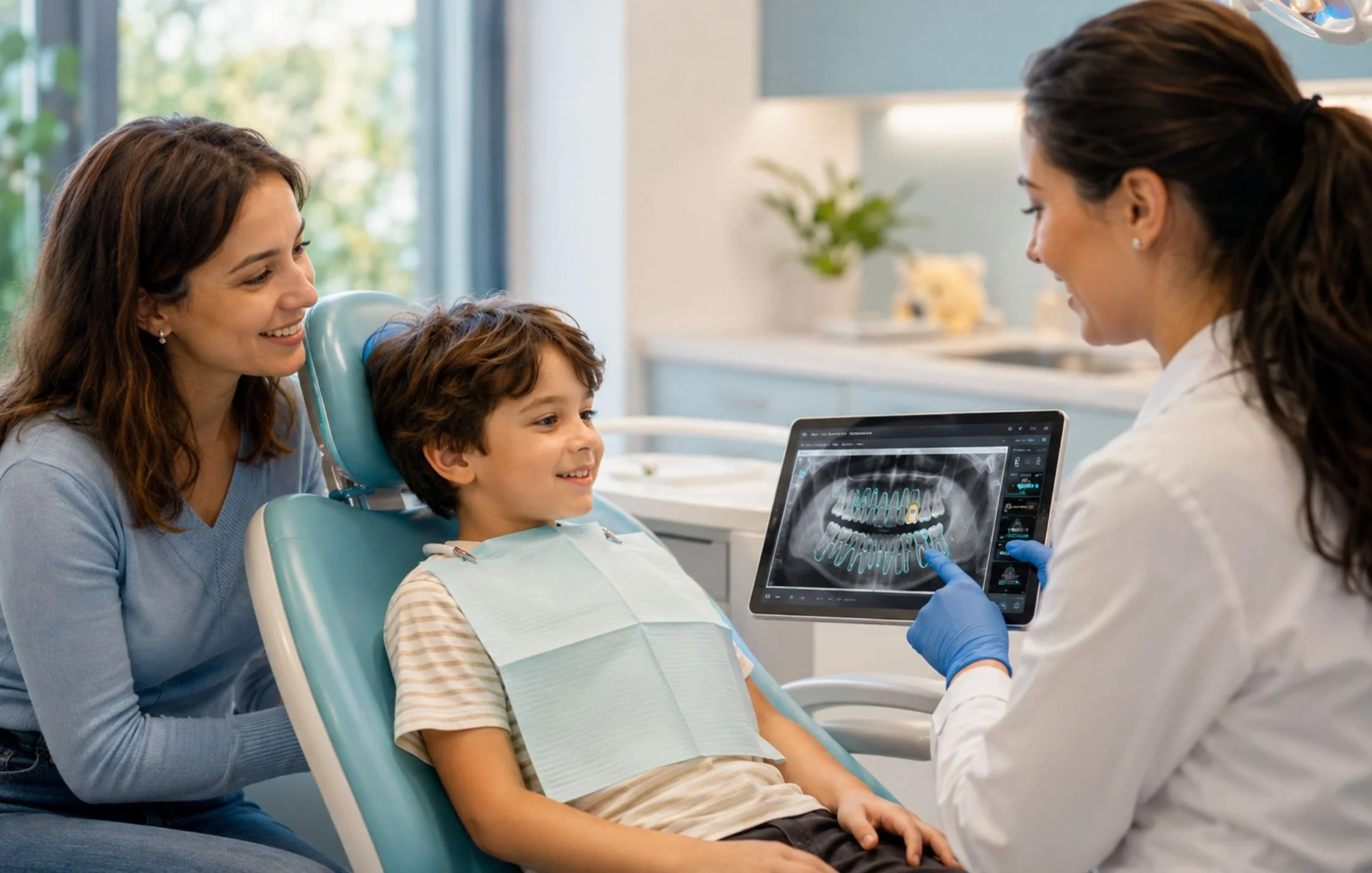
Artificial intelligence is becoming part of modern dental care. But what can it actually do for children?
Artificial intelligence in pediatric dentistry can help dentists analyse dental images, identify possible cavities, assess dental development, and evaluate certain risks. It can process large amounts of information quickly and help dentists review findings more consistently.
However, AI does not and cannot replace the dentist. Rather, it works as a supporting tool during the diagnostic process.
For parents, that distinction matters. AI can assist with dental care, but a qualified dentist still makes the clinical decisions.
How Is AI Used in Pediatric Dentistry?
Dentists and researchers are exploring AI for several areas of children's dental care.
Common applications include:
Detecting cavities on dental X-rays.
Analysing dental photographs.
Identifying missing or extra teeth.
Assessing tooth development.
Estimating dental age.
Identifying certain dental abnormalities.
Assessing a child's risk of developing cavities.
AI can also help dentists review dental images. This can be useful when a problem is small or difficult to spot.
When you visit a clinic such as Smiley Kids Dental, your child's dentist can explain which diagnostic tools are appropriate for their examination.
Can AI Detect Cavities in Children?
Artificial intelligence cavity detection is one of the most researched uses of AI in dentistry.
AI systems can analyse dental X-rays and photographs for patterns associated with tooth decay. They can flag areas that may require closer examination.
Research has shown promising results for AI-based cavity detection in children's dental images. However, AI does not determine treatment on its own.
A dentist still needs to examine the child and consider their symptoms, dental history, oral examination, and imaging results.
This is also why artificial intelligence dental diagnosis should be viewed as decision support rather than an independent diagnosis. Explore our dental services to learn more about pediatric care.
How Accurate Is AI in Pediatric Dentistry?
Accuracy depends on the technology, the type of dental problem, the quality of the images, and the data used to train the system.
Some studies have reported high accuracy for detecting cavities and identifying dental structures. These results show that AI has real potential in pediatric dental care.
However, strong research results do not mean every AI system will produce a correct result for every child.
Dentists must still review AI findings and compare them with the child's complete clinical picture.
What Are the Benefits of AI in Pediatric Dentistry?
AI can support dentists in several practical ways.
Earlier detection: AI may help identify possible dental problems before they become more advanced.
Efficient image analysis: AI can quickly review dental images and highlight areas that need attention.
Risk assessment: Certain systems can analyse patterns linked to a child's risk of developing cavities.
Better treatment planning: AI findings can give dentists additional information when deciding what care a child may need.
These tools can also support personalized pediatric dental care. A dentist can combine AI-supported findings with the child's dental history, habits, examination results, and individual needs.
If your child needs a dental assessment, you can Book an Appointment with our team.
Should Parents Trust AI Dental Diagnosis?
Parents should see AI as a tool that supports the dentist, not as a replacement for professional care.
AI can make errors. Image quality, limited training data, and differences between patients can affect its results.
The dentist remains responsible for interpreting the findings and explaining them to parents.
Parents should also feel comfortable asking how technology is being used during their child's examination. Clear communication helps families understand what the technology can and cannot tell them.
What Does AI Mean for the Future of Pediatric Dentistry?
The future of pediatric dentistry will likely include more AI-supported tools.
Researchers continue to study AI for cavity detection, dental development, risk assessment, and image analysis. These technologies may help dentists identify problems more efficiently as they become more refined.
The priority remains the same: finding problems early and providing appropriate care.
AI can provide useful information. The dentist provides the clinical judgment, experience, and personal care your child needs.
When your child needs professional attention, Book an Appointment and let our dental team assess their individual needs.