
Your baby's first tooth appears, and suddenly, brushing becomes part of the bedtime routine. You buy a tiny toothbrush, learn how much toothpaste to use, and try to keep those little teeth clean. But one question often gets overlooked: when should your child actually visit a dentist?
You do not have to wait until your child has a full set of teeth, complains about a toothache, or starts losing baby teeth. In fact, the first dental visit should happen much earlier. At Smiley Kids Dental, we encourage parents to make dental care part of their child's early milestones, just like regular health checkups. Starting early gives us an opportunity to understand your child's oral development and help you build healthy habits from the beginning.
When Should Your Child Have Their First Dental Visit?
The American Academy of Pediatric Dentistry recommends scheduling your child's first dental visit when their first tooth appears, or no later than their first birthday.
That might seem early, especially when your baby has only one or two teeth. However, baby teeth are important from the moment they erupt. They help children chew, support speech development, and maintain the space needed for permanent teeth.
An early appointment is not about putting a baby through complicated dental treatment. It is about checking how the teeth and gums are developing, identifying early signs of decay, and helping you understand how to care for your child's mouth.
If your little one has already celebrated their first birthday without a dental visit, there is no reason to feel guilty. Schedule an appointment and establish a dental care routine now.
Should You Take Your Child to a Dentist Before Their First Birthday?
Yes. You should not wait for your child's first birthday if their first tooth has already appeared.
The first tooth brings new responsibilities. Milk teeth are vulnerable to decay, particularly when sugary drinks, frequent snacking, or inadequate cleaning become part of a child's routine.
During an early visit, we focus on more than checking whether a tooth looks healthy. We also discuss:
Brushing habits: How to clean emerging teeth and gums with an age-appropriate toothbrush and fluoride toothpaste.
Feeding routines: How frequent exposure to sugary drinks and prolonged bottle use affects teeth.
Teething: What is normal during tooth eruption and how to manage discomfort safely.
Pacifier and thumb-sucking habits: How these habits affect developing teeth and when to discuss changes.
Fluoride: Whether your child is receiving appropriate fluoride protection.
These conversations help you make everyday decisions that protect your child's developing smile.
What Signs Mean Your Child Needs a Pediatric Dentist?
Your child's regular checkup schedule is important, but certain symptoms deserve attention sooner. Do not wait for the next routine appointment if you notice:
White, brown, or dark spots: These can indicate early changes in the enamel or tooth decay.
Bleeding or swollen gums: Persistent irritation or bleeding deserves a dental assessment.
Toothache or sensitivity: Pain while eating, drinking, or brushing needs attention.
Difficulty chewing: Your child should not regularly avoid food because of discomfort.
Dental injury: A chipped, broken, displaced, or knocked-out tooth needs prompt professional evaluation.
Persistent bad breath: When brushing does not resolve it, a dentist should check for possible oral health causes.
Facial swelling, fever with dental symptoms, or severe pain requires urgent assessment. If your child has difficulty breathing or swallowing because of swelling, seek emergency medical care.
How Often Should Children Visit a Pediatric Dentist?
A dental visit is not a one-time milestone. Children need regular examinations as their mouths develop.
For many children, a checkup every six months is a suitable starting point. However, the right interval depends on their oral health, cavity risk, previous dental problems, and individual needs. Children with a history of tooth decay or other concerns might need more frequent monitoring.
As your child grows, appointments also help us follow important changes, including:
The eruption and alignment of baby teeth.
The transition from baby teeth to permanent teeth.
The development of the bite and jaw.
The condition of newly erupted permanent molars.
Oral hygiene habits and cavity risk.
Regular visits help us address small concerns before they become more complicated.
What Happens During Your Child's First Pediatric Dental Appointment?
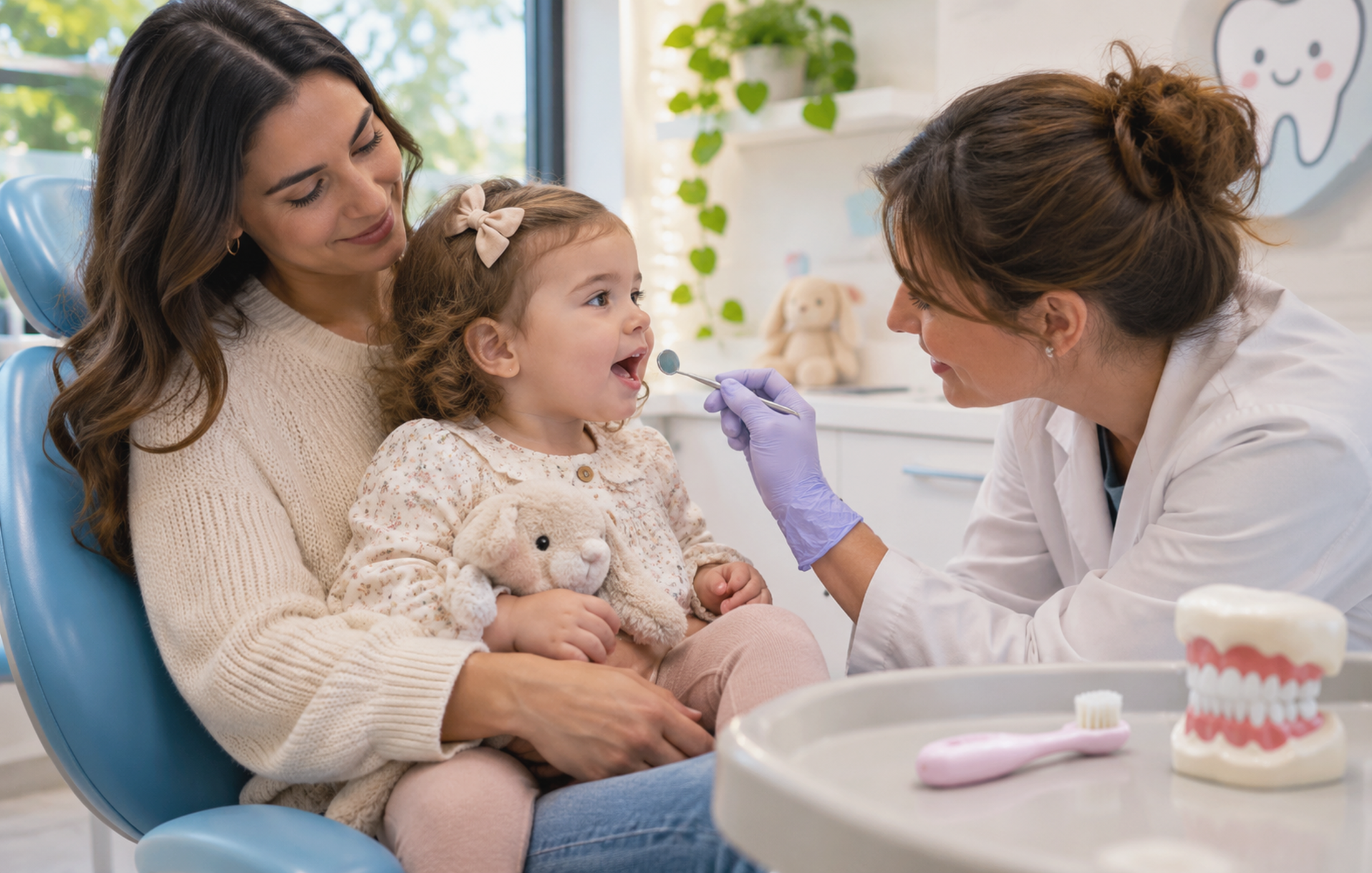
A first dental visit should feel like an introduction, not an intimidating experience. We take time to understand your child's dental history, daily habits, and any concerns you have noticed.
Depending on your child's age and comfort, the appointment includes an examination of the teeth, gums, and oral tissues. We also assess tooth development and look for signs of decay or other concerns.
You will receive practical guidance on brushing, toothpaste, nutrition, and preventive care. If we identify an issue that needs attention, we explain the findings and discuss the next steps with you.
You can help your child feel comfortable by keeping the conversation positive. Avoid using words that associate dental visits with pain or punishment. A calm introduction helps children become familiar with the dental environment.
Give Your Child a Healthy Start With Smiley Kids Dental
Your child's first dental visit is the beginning of a relationship with oral health, not simply another appointment on the family calendar. The earlier you establish that routine, the easier it becomes to recognise changes, address concerns, and teach habits that support a healthy smile.
At Smiley Kids Dental, we believe children deserve dental care that respects their age, comfort, and individual needs. We take time to understand each child's development, explain our recommendations to parents, and make preventive care a priority. Whether your baby has just welcomed their first tooth or your school-aged child needs a regular examination, we are here to help you make informed decisions about their dental health.
If you have been putting off that first appointment, you do not need to wait for a problem to appear. Explore our dental care services and learn how we support growing smiles.
Ready to plan your child's first visit or schedule their next checkup? Book an appointment with our team. We look forward to helping your child build a comfortable, positive relationship with dental care, one visit and one healthy habit at a time.