
What’s New in Children’s Dentistry in 2026? Top 5 Innovations
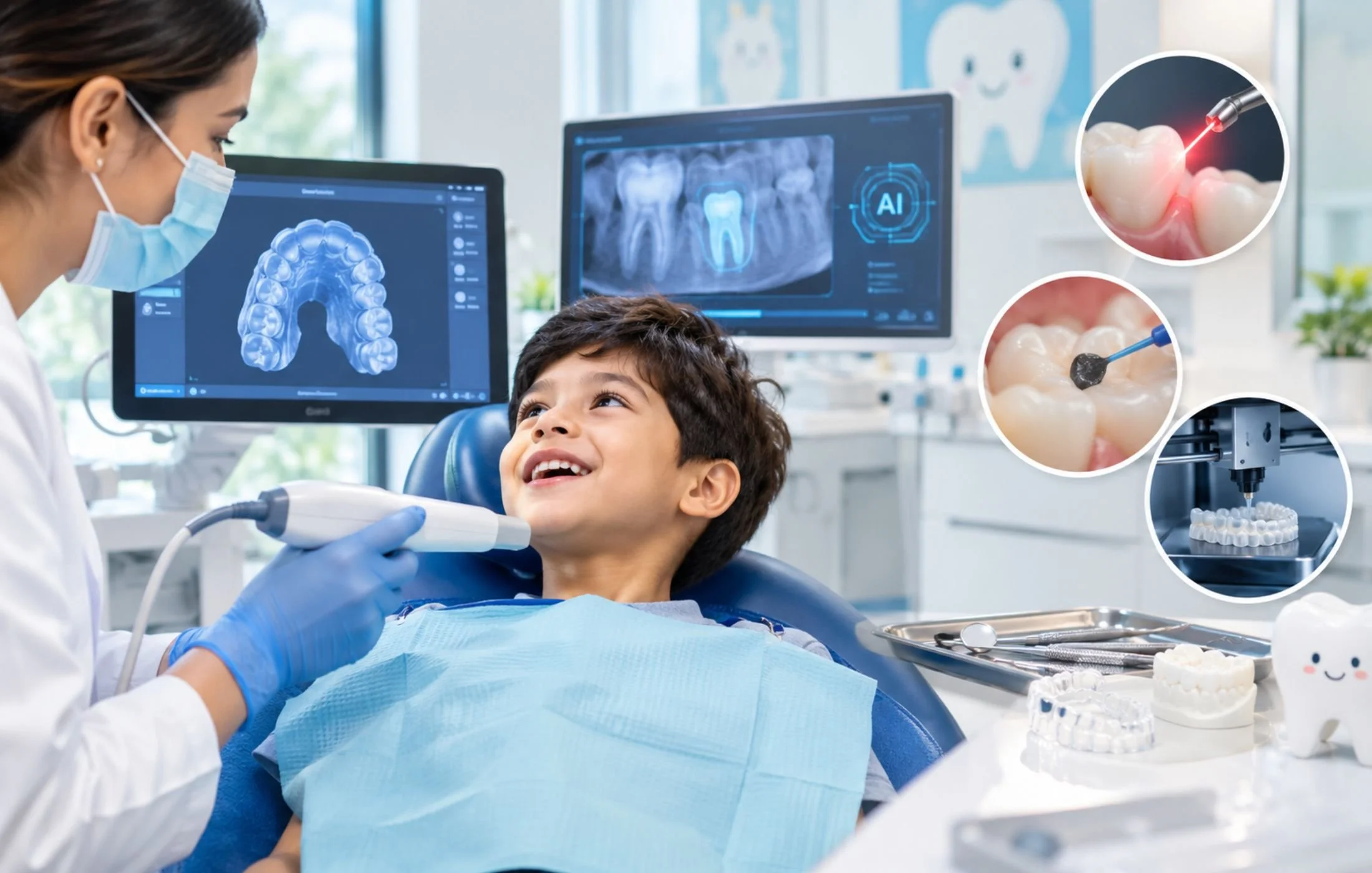
A trip to the dentist can look very different for children in 2026. New technology is helping dentists detect problems earlier, plan treatments more precisely, and make certain procedures easier for young patients.
From AI-assisted dental imaging to digital scans and minimally invasive cavity care, dentistry innovations are changing pediatric dental care. But what do these developments actually mean for your child?
Here are five advances parents should know about.
1. AI Can Support Dental Diagnosis
Artificial intelligence is becoming a useful support tool in dental diagnosis. AI systems can analyze dental images and identify patterns associated with cavities, dental abnormalities, and other conditions.
Research shows promising results for AI-assisted cavity detection. It can help dentists identify areas that may need closer examination and support faster assessment.
However, AI does not replace a dentist. A dental professional still needs to examine your child, consider their symptoms and history, and make the final clinical decision.
This makes AI dental diagnostics for children an interesting development among the latest children’s dental treatments, particularly as researchers continue to study how these systems can improve pediatric care.
For families looking for child-focused care, Smiley Kids Dental provides dental services designed around children's changing needs.
2. Digital Scans Can Make Dental Impressions Easier
Traditional dental impressions can be uncomfortable for children. The material can feel unpleasant and may be difficult for younger children to tolerate.
Intraoral scanners offer another approach. A small handheld scanner captures digital images of the teeth and mouth to create a detailed 3D model.
These scans can support orthodontic planning, dental appliance design, and treatment monitoring. They can also make it easier for dentists to show parents what they see during an examination.
For children who need orthodontic or restorative care, digital scanning can make parts of the treatment process simpler and more comfortable.
3. Minimally Invasive Treatments Can Help Manage Cavities
Modern pediatric dentistry increasingly focuses on preserving healthy tooth structure. Instead of immediately using extensive restorative procedures, dentists may consider minimally invasive options when appropriate.
Silver diamine fluoride, or SDF, is one example. It can help stop or slow the progression of certain cavities and may reduce the need for more extensive treatment in suitable cases.
SDF is not right for every cavity. It can also permanently darken the treated area, so parents should discuss its benefits and limitations with their child's dentist.
You can explore available pediatric dental services to understand the types of care that may be available for different dental needs.
4. Laser Dentistry Is Supporting Selected Procedures
Lasers have become another tool used in certain areas of pediatric dentistry. Depending on the procedure, dentists may use laser technology for selected hard- and soft-tissue treatments.
Laser treatment can provide precise tissue management in appropriate situations. It may also support certain procedures involving soft tissues.
However, lasers are not automatically better for every child. The dentist should decide whether laser treatment is suitable based on the child's dental condition and the procedure being performed.
If your child has a dental concern that needs assessment, book an appointment to discuss the available treatment options with a dental professional.
5. 3D Printing Is Improving Customized Dental Appliances
3D printing is bringing more digital technology into dental appliance production. Digital scans can be combined with computer-aided design to create appliances based on a child's individual dental structure.
Researchers are exploring 3D-printed space maintainers and orthodontic appliances for pediatric patients. These digital workflows can support customization and efficient production, although research into long-term clinical outcomes continues.
For children who require dental appliances, this technology may offer more digitally planned and individually fitted options.
What Are the Latest Advances in Dentistry Parents Should Know?
What are the latest advances in dentistry? AI-assisted diagnosis, digital scanning, minimally invasive cavity management, laser applications, and 3D printing are among the developments shaping modern pediatric care.
These technologies can support diagnosis and treatment, but they do not replace a dentist's expertise. Your child's age, dental health, symptoms, and individual needs should always guide treatment decisions.
As pediatric dentistry continues to develop, parents can ask their dentist which newer technologies are appropriate for their child rather than assuming every innovation suits every situation.
Smiley Kids Dental Keeps Children’s Care Focused on Their Needs
Technology can improve dental care, but children still need a dental team that understands their age, comfort, and individual needs.
At Smiley Kids Dental, we combine child-focused care with modern dental approaches to help families make informed decisions about their children's oral health.
If your child needs a dental checkup or you have questions about a recommended treatment, book an appointment with Smiley Kids Dental to discuss your child's needs with our team.