
Dental Hacks Parents Should Never Try on Kids
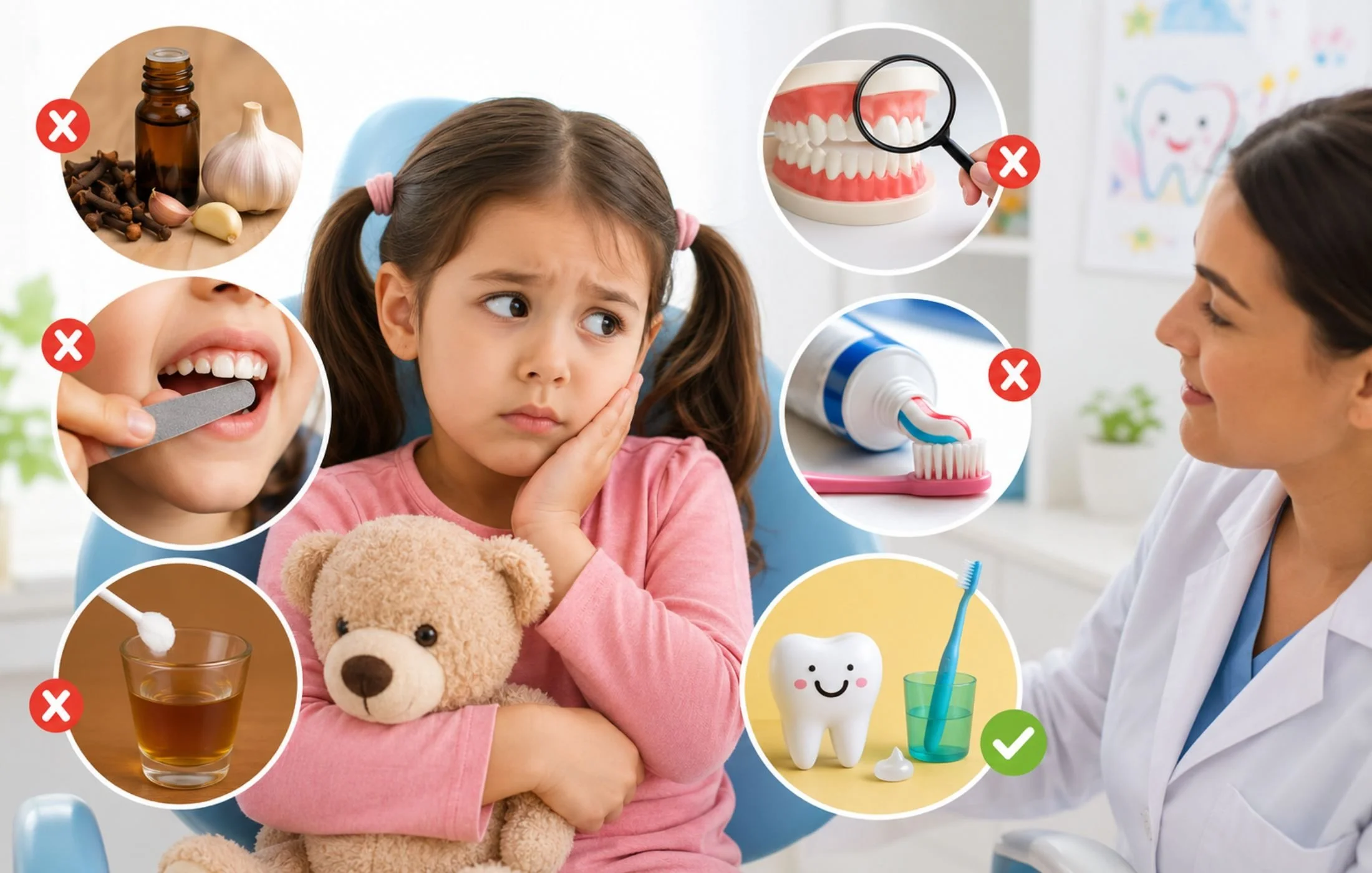
Social media moves fast and parenting forums move faster. Between TikTok trends and well-meaning advice from relatives, parents today are surrounded by dental tips that sound logical but can cause lasting damage to a child's teeth and gums. Some of these hacks are genuinely dangerous. Others are simply ineffective in ways that allow real problems to quietly worsen.
This blog covers the most common dental mistakes Canadian parents make, why they happen, and what to do instead.
Using Clove Oil or Garlic on a Toddler's Sore Gums
Natural remedies feel safe because they are natural. Clove oil in particular circulates widely as a home solution for teething pain and toothaches in young children. The problem is that clove oil contains eugenol, a compound that can chemically burn soft gum tissue in the concentrations found in undiluted or even diluted home applications. A toddler's gums are far more sensitive than an adult's.
Garlic applied directly to the gum is another common one. Neither of these addresses the underlying issue. If a child is in dental pain, that pain has a cause that needs to be assessed, not masked. Good baby teeth care starts with treating symptoms as signals, not inconveniences to be numbed at home.
Filing Down a Child's Teeth at Home
This one comes directly from TikTok and it is among the most damaging trends a parent can follow. Videos showing adults filing their own teeth with nail files went viral and some parents extended the logic to their children's uneven or chipped baby teeth.
Tooth enamel does not grow back. Filing removes it permanently, exposing the softer dentine layer underneath and making teeth immediately more vulnerable to decay, sensitivity, and fracture. A chipped or uneven baby tooth should always be assessed by a family dentist Canada trusts, not smoothed down with a household tool. Our team at Smiley Kids Dental offers safe, child-focused dental services for exactly these situations.
Rubbing Alcohol or Whiskey on Teething Gums
This is a generational hack that still appears in Canadian parenting groups more often than it should. Alcohol is toxic to infants and toddlers in even small amounts. The gums absorb substances quickly, and what seems like a tiny application is enough to affect a young child's system. Health Canada has been clear on this point for years.
For teething discomfort, a clean chilled teething ring or a cold damp cloth is safe, effective, and actually addresses the symptom without introducing any risk.
What Dental Hacks Are Unsafe for Children?
As a general rule, what dental hacks are unsafe for children is a useful question to apply to anything not recommended by a paediatric dentist. If a remedy involves a sharp tool, an undiluted essential oil, an adult product, or something seen in a 30-second video, it warrants serious caution before applying it to a child's mouth. Hence, you must consult an expert dentist before doing anything blindly.
Skipping Baby Teeth Because "They Fall Out Anyway"
This is not a TikTok trend. It is one of the oldest and most widespread dental mistakes Canadian parents make. Baby teeth are not placeholders. They guide jaw development, hold space for permanent teeth, support speech development, and allow children to chew properly. A decayed baby tooth that is lost too early can cause permanent teeth to shift, crowd, or erupt incorrectly.
Oral health for children begins with baby teeth being taken seriously. Book an appointment if your child has not had their first dental visit yet. The Canadian Dental Association recommends it within six months of the first tooth appearing.
Using Adult Toothpaste on Young Children
Adult fluoride toothpaste contains concentrations that are too high for children under 3. Young children swallow toothpaste regularly and ingesting too much fluoride during tooth development can lead to fluorosis, a condition that causes permanent white spots or streaking on developing permanent teeth.
How to protect your child's teeth naturally and safely starts with age-appropriate toothpaste. A grain-of-rice-sized amount of children's fluoride toothpaste for children under 3, and a pea-sized amount from age 3 onward.
Conclusion
The internet will always have another hack. But a child's teeth are not the place to experiment. Baby teeth care and long-term oral health for children depend on consistent, evidence-based habits and professional guidance, not trends.
When something does not look or feel right in your child's mouth, the right move is always a professional opinion. Contact Smiley Kids Dental and give your child's smile the care it deserves.